
Why the Toss Matters So Much in T20 Cricket
Introduction
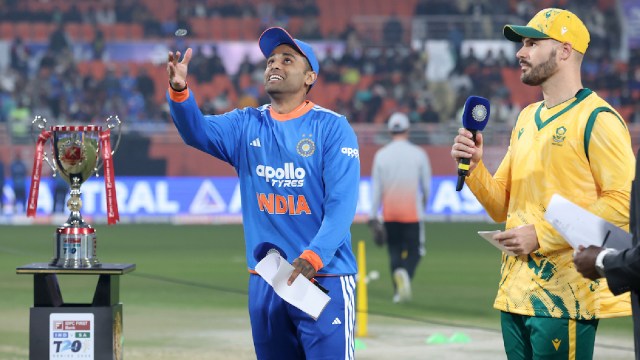
A cricket match begins with a coin, and in T20 cricket, that coin matters more than in any other format. Two seconds, one flip, one call, and the captain who wins it gets to choose whether to bat or bowl first. In the 2021 T20 World Cup, the team that won the toss won 29 of 44 matches, or 65.9%, and in Dubai, the chasing team won all nine night games. Fans who follow the game with a SkyExchange ID will have watched a captain win the toss, choose to bowl, and win the match, and wondered whether the toss decided it. This blog explains why the toss matters so much in T20 cricket, from the dew that falls after 8:30 pm to the Wankhede, where the team batting second has won 62.5% of T20Is, to the 2024 World Cup final, where India won the toss, batted first, and still won.
The Numbers: 52% Against 65.9%
The first thing to know about the toss is that, on average, it does not matter as much as it seems. Across more than 2,000 T20 internationals, the team that wins the toss wins about 52% of matches, and the team that loses it wins about 48%. That is a small advantage, about 2 to 4%, and in the IPL, where the pitches are more standardised and the teams are more evenly matched, the advantage drops to around 1 to 3%. In Test cricket, the toss-winner wins about 49 to 50% of matches, which is no advantage at all, and in ODIs, the figure is 52 to 53%.
But the average hides the truth, because the toss matters much more at some venues and in some tournaments than it does on average. In the 2021 T20 World Cup, the team that won the toss won 29 of 44 matches, or 65.9%, and 10 of the 12 games in Dubai were won by the side winning the toss. In day-night T20 fixtures, the toss-winners who choose to chase have a 58 to 60% win rate. The toss is a small edge that becomes a big edge when the conditions are right.
The 52% Average: A Small Edge, Most of the Time
The 52% figure is the average across more than 2,000 T20 internationals, and it is the number to remember when someone says the toss decides every match. It does not. The toss-winner wins about 52% of matches, and the toss-loser wins about 48%. But the edge grows when the dew comes, when the venue favours chasing, and when the tournament is played under lights.
The Dew: Why Chasing Wins
The main reason the toss matters in T20 cricket is dew. Dew is the water that condenses on the grass and the ball during evening matches, and it makes the ball slippery and difficult to grip. Spin bowlers struggle to impart revolutions on the ball, and fast bowlers lose control and are unable to generate swing. Batsmen face a slightly easier task, because the ball does not grip the surface, making it harder for bowlers to extract bounce or deviation. Dew forms at certain Indian venues, like Delhi, Mumbai and Kolkata, and it dramatically favours the chasing team, especially in the death overs.
That is why captains who win the toss in T20 cricket usually choose to bowl first. In T20Is from 2010 to 2025, captains bowled first about 62% of the time after winning the toss, and in the IPL and the BBL, captains chase more than 60% of the time after winning the toss. England chose to bowl the last 24 times they won a T20I toss before the 2021 World Cup. The logic is simple: if you bowl first, you bowl when the ball is dry, and you bat when the ball is wet. Dew falls after 8:30 pm in India, and that is when the chasing team takes over.
The Dubai Nights: Nine Out of Nine
The 2021 T20 World Cup was played in the UAE, and it was the tournament where dew decided everything. Between Abu Dhabi and Dubai, 21 of the 27 games were won by the chasing teams, and under lights in Dubai, the chasing team won all nine night games. The teams batting first either lost early wickets or struggled to time their acceleration, and they ended up with below-par totals. The dew and the lack of movement later at night meant the margin for error when bowling under lights was minimal. The seamers took only eight wickets in nine games when bowling second under lights, and conceded almost 10 runs an over.
The Wankhede: A Venue Where the Toss Decides
The Wankhede Stadium in Mumbai is the best example of a venue where the toss matters. In eight T20Is at the Wankhede, the teams batting second have won five, or 62.5%, and the team winning the toss has won 75% of the matches. The average first-innings score at the Wankhede in T20Is is 191, which means any team batting first must aim for at least 200 to be competitive, and the highest successful chase is 230 for 8. The captains know it: toss-winners at the Wankhede have chosen to bowl more than 70% of the time.
The 62.5% Chase: Batting Second at the Wankhede
The Wankhede is a batting paradise, with a fast outfield and short boundaries, and the ball comes onto the bat nicely. But the dew makes it even better for the chasing team, because the ball gets wet, the bowlers lose their grip, and the batsmen can hit through the line. It is a small sample, only eight matches, but it shows the pattern: at some venues, the toss is worth more than at others, and the Wankhede is one of them.
The 2021 World Cup: When the Toss Was Everything
The 2021 T20 World Cup was the tournament where the toss mattered most. Out of the 45 matches played, 29 were won by the team chasing, or 65%, and 30 were won by the team that won the toss, or 67%. In the Super 12s, 18 of the 23 matches between Full Members were won by the chasing teams, including nine out of nine in Dubai. Since 2014, seven of the eight knockouts in the Men’s T20 World Cups have been won by the chasing sides.
In the 2021 final, Australia chased 173 against New Zealand and won with seven balls to spare, with David Warner and Mitchell Marsh scoring half-centuries, waiting for the dew to settle in. The chase to win was not a new trend: in 2016, West Indies won the final against England by chasing, in 2014, Sri Lanka won against India while having a target in sight, and in 2009 and 2010, Pakistan and England won after chasing in the final. Only India and West Indies had won the 2007 and 2012 editions after batting first.
The 2024 Final: When Batting First Won
But the toss does not always decide the match, and the 2024 T20 World Cup final is the proof. India won the toss at Kensington Oval in Barbados on 29 June 2024, and Rohit Sharma chose to bat first, as India did in 2007. India were reduced to 34 for 3, but Virat Kohli scored 76 off 59 balls, and Axar Patel scored 47 off 31, and they stitched a 72-run stand for the fourth wicket to guide India to 176 for 7, the highest total in a T20 World Cup final. South Africa, in reply, got close: Quinton de Kock scored 39, Tristan Stubbs scored 31, and Heinrich Klaasen scored 52, and they needed 30 runs from the last 30 balls.
The 30 Off 30: How India Defended It
South Africa needed 30 off 30 balls, and they looked like they would win, but India defended it. Hardik Pandya took 3 for 20, Jasprit Bumrah took 2 for 20, and Arshdeep Singh took 2 for 18, and Hardik defended 16 runs in the final over, giving away just eight runs. Suryakumar Yadav took a stunning catch to dismiss David Miller off Hardik’s ball in the final over, and India won by seven runs, ending a 17-year wait for a T20 World Cup title, and an 11-year wait for an ICC trophy.
When Batting First Wins
There are times when batting first is the right choice, and the best captains know when. If the pitch is dry and it will get slower, batting first is better, because the pitch will be harder to bat on later. If the team has a strong bowling attack, and it can defend a total, batting first is better, because it puts pressure on the chasing team. If the match is a day game, and there is no dew, batting first is better, because the conditions do not change. In the 2024 final, India batted first because the pitch at Kensington Oval supported the pacers early on, and because India had the bowling to defend 176. It worked, and it shows that the decision matters more than the call.
The Captain’s Decision: More Than a Coin
The toss is a coin, but the decision is not. The captain who wins the toss must look at the pitch, the weather, the dew, the team, and the opposition, and decide whether to bat or bowl. In T20 cricket, the default is to bowl first, because of the dew, and because having a target on the board takes pressure off the chasing batsmen. But the default is not always right, and the best captains know when to go against it. Rohit Sharma batted first in the 2024 final, and he won.
How Fans Followed the Toss and the Match With a SkyExchange ID
The toss is the first moment of a match, and fans love it, because it tells them what is coming. A captain who wins the toss and chooses to bowl is telling the fans that the dew will come, and the chase will be easier. A captain who wins the toss and chooses to bat is telling the fans that he trusts his bowlers to defend a total. Fans who follow the game with a SkyExchange ID will have watched the toss, and then watched the match, and wondered whether the toss decided it.
A SkyExchange ID online is one way fans kept up with the live scorecard, the team totals, and the key moments in each match. Live updates mattered in a T20 match, when a team’s fortunes could change after a single over.
A SkyExchange login is the step fans use to access their account and check the latest match information. Fans should only use official platforms and keep their account details private.
Using a SkyExchange ID Online to Follow Live Matches
Fans can follow a match from anywhere, whether they are at home, travelling, or watching with friends. In a T20 match, that matters most when the toss has been won, and the chase is on, and every ball counts. Live updates helped them catch the key moments.
SkyExchange Login: Checking Scores, Squads and Updates
It is a simple, familiar process for people who follow cricket online regularly. For each game, that meant checking the playing eleven before the toss, following the live scorecard, and reading the match summary afterwards.
FAQs
Does winning the toss help in T20 cricket?
Yes, but only a little on average. Across more than 2,000 T20 internationals, the team that wins the toss wins about 52% of matches, and the team that loses it wins about 48%. That is an advantage of about 2 to 4%. But at some venues and in some tournaments, the advantage is much bigger: in the 2021 T20 World Cup, the toss-winner won 65.9% of matches.
Why do captains usually choose to bowl first in T20?
Because of dew. Dew makes the ball slippery and difficult to grip, and it favours the chasing team, especially in the death overs. In T20Is from 2010 to 2025, captains bowled first about 62% of the time after winning the toss, and in the IPL and the BBL, captains chase more than 60% of the time. In day-night T20 fixtures, toss-winners who choose to chase have a 58 to 60% win rate.
What happened in the 2024 T20 World Cup final?
India won the toss at Kensington Oval in Barbados on 29 June 2024, and Rohit Sharma chose to bat first. India scored 176 for 7, with Virat Kohli scoring 76 off 59 balls, and South Africa scored 169 for 8, with Heinrich Klaasen scoring 52. Hardik Pandya defended 16 runs in the final over, and India won by seven runs, ending a 17-year wait for a T20 World Cup title.
Which venue favours chasing the most?
The Wankhede Stadium in Mumbai is one of the best examples. In eight T20Is there, the teams batting second have won five, or 62.5%, and the team winning the toss has won 75% of the matches. The average first-innings score is 191, and the highest successful chase is 230 for 8. The dew makes chasing easier, and captains who win the toss there have chosen to bowl more than 70% of the time.
How did fans follow the toss and live scores online?
Many fans followed live scores on their phones. A SkyExchange ID online helped supporters check the live scorecard and key moments in one place, while a SkyExchange login gave them access to follow updates during the match, including the toss and team announcements.
Conclusion
The toss matters in T20 cricket, but not as much as it seems, and more than it seems, at the same time. On average, the team that wins the toss wins about 52% of matches, a small edge. But at some venues, like the Wankhede, where the chasing team has won 62.5% of T20Is, and in some tournaments, like the 2021 World Cup, where the toss-winner won 65.9% of matches, the edge is big. The reason is dew, which falls after 8:30 pm, makes the ball slippery, and favours the chasing team. That is why captains bowl first 62% of the time after winning the toss. But the 2024 final shows the other side: India won the toss, batted first, and won by seven runs.